The Stella departs New York
Jacob’s final voyage began with a destination in London. The exact fate of the ship and its crew remains unknown.
For American family historians
Your ancestors may have crossed an ocean, endured war, or built a life in a new place. Learn to read the old German handwriting in their surviving letters, one word at a time.


A story worth opening
A century-old letter can hold more than a name and a date. Maybe it reveals a relative’s experiences of World War I, times of hardship or a long forgotten love.
YouTube is loaded only when you press play; its privacy policy then applies.
A family story across the Atlantic
In the 19th and early 20th centuries, people left German-speaking lands with different hopes and fears: work, social pressures, war, or hunger could all shape a decision to go. Such journeys took daring, as did the work of seafarers who made Atlantic travel and trade possible.
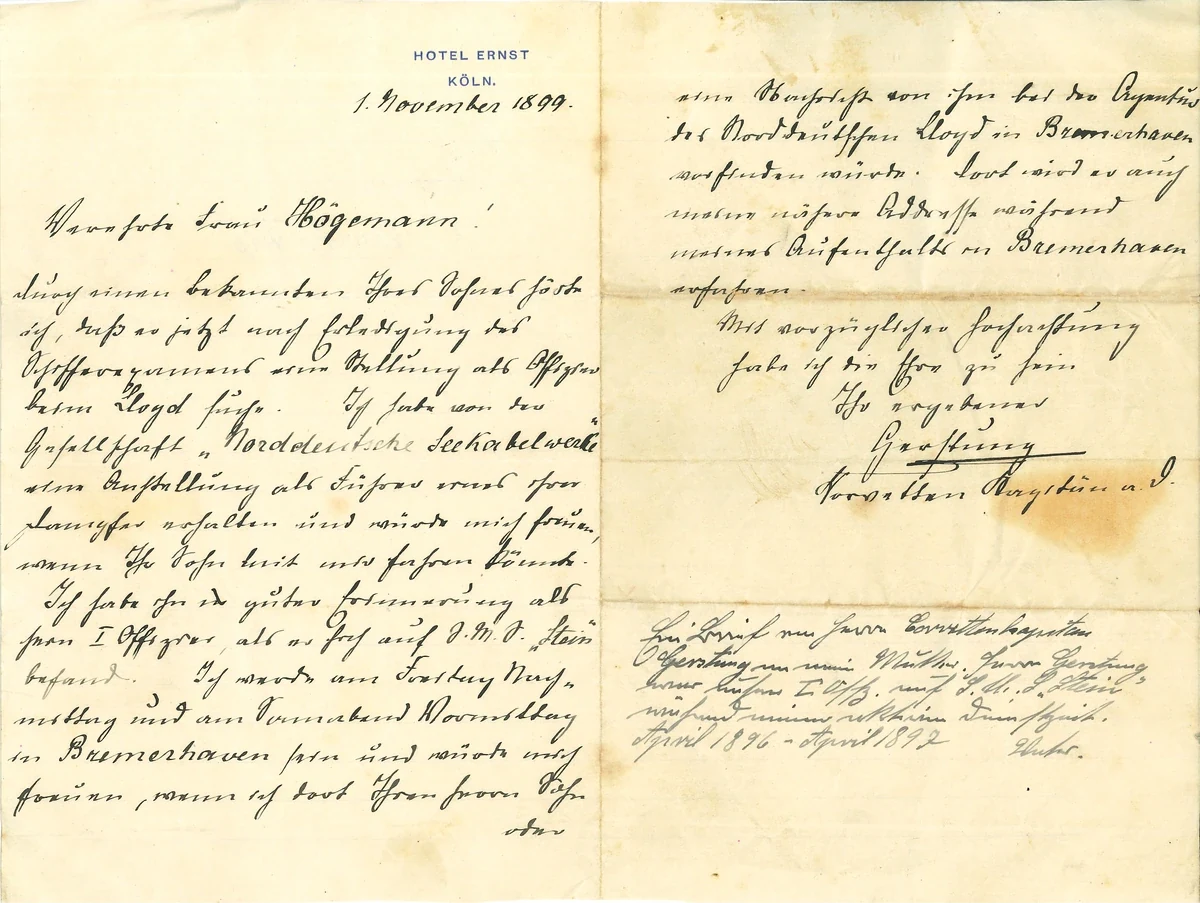
In 1892, Captain Arend Jacob Högemann left New York aboard the Stella, bound for London. The sailing ship never arrived. He was one of the daring who connected Europe with the New World transporting people and cargo over the Atlantic.
Although Jacob was not a German immigrant, his family’s loss shows the risks of a passage to the Americas. Your ancestor's letters might tell a very different story than that of Jacob. But in each case, being able to read Kurrent — old German handwriting — can lead us past a name toward a person. Learning it matters to families on both sides of the ocean.
Jacob’s final voyage began with a destination in London. The exact fate of the ship and its crew remains unknown.
His son Gerhard, his wife, and two younger brothers had no word. In later family writing, Gerhard remembered his father as a model for his own life.
Family records place his first voyage after the disappearance on a route to New York. He follows in his father's footsteps and becomes a sailor for the North German Lloyd, the largest shipping line for German immigrants to the United States but also other places in the world.
“I will never forget him until my dying day. He has been my role model in everything.”English translation of Gerhard Högemann’s later recollection of his father
A skill, not a shortcut
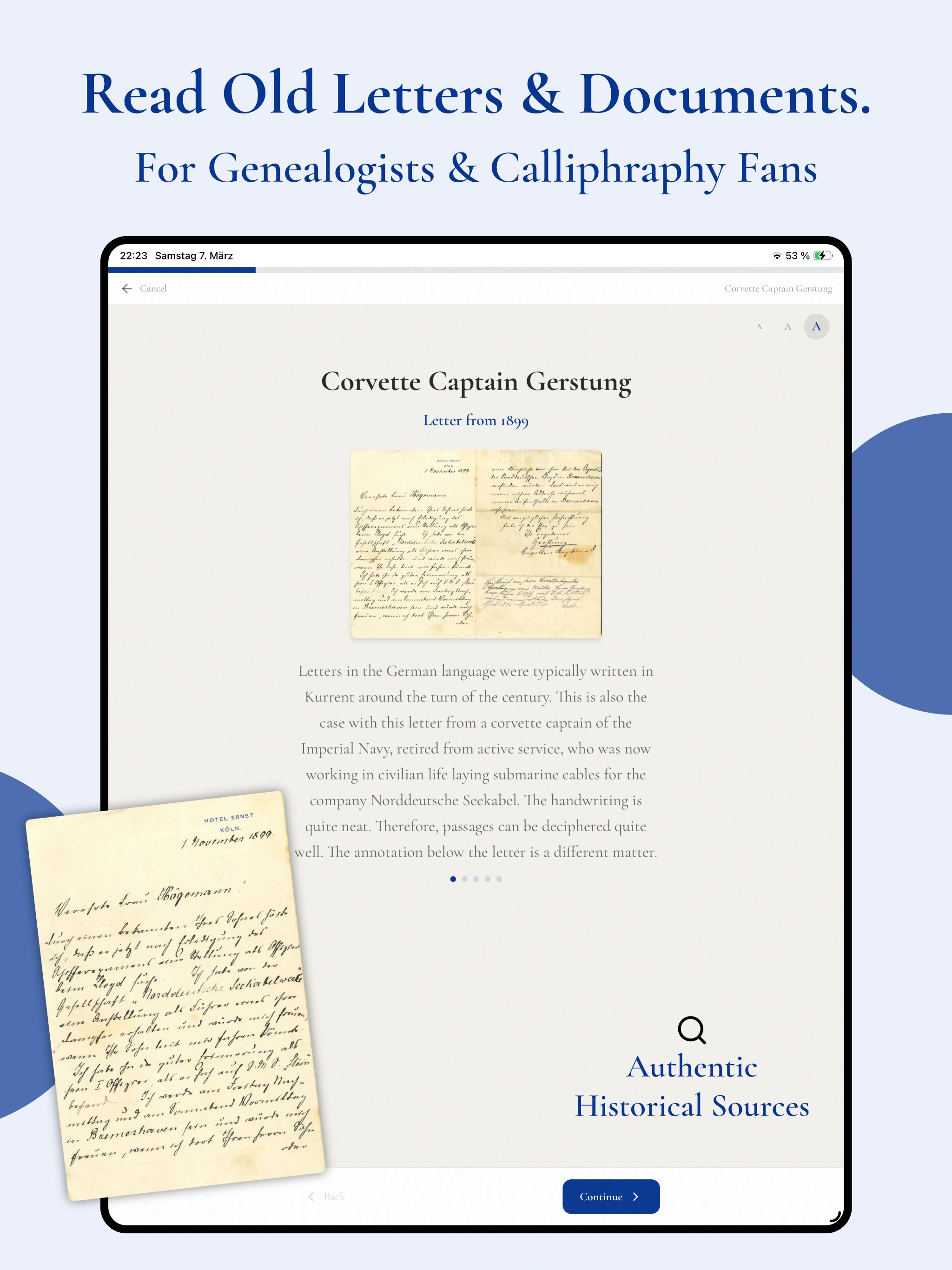
Kurrent can feel like a locked door at first. Spitzfeder builds the visual vocabulary that lets you slow down, compare forms, and make your own reading decisions. It is a learning app for Kurrent.
A more grounded research companion
Structured lessons build familiarity with Kurrent and closely related Sütterlin forms through active reading and writing.
Old spelling, damage, unfamiliar names, and individual hands still take careful work. Ambiguity is part of archival reading.
Your family documents remain yours. Use the skill you build to look again at letters, notes, and records in your own time.
Yes. The app teaches the script separately, so you can return to your letter as your confidence grows. The letter itself may include unfamiliar spelling, personal abbreviations, damage, or another writing style, so reading it can still take time.
No. Spitzfeder is a learning app. It teaches you to read and write Kurrent through exercises, historical-source practice, and stories; it does not automatically translate family documents.
Free materials
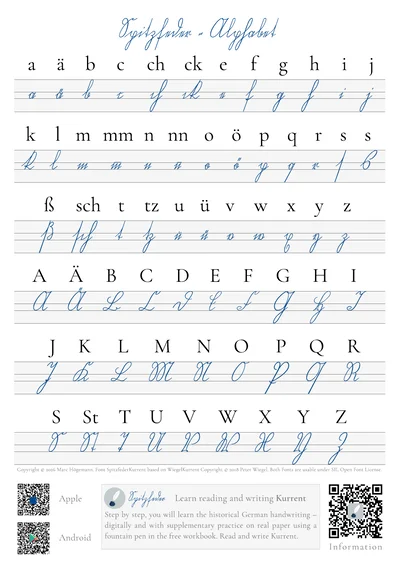
The alphabet makes historical family letters easier to approach, while the lined paper offers room to explore Kurrent forms at your own pace.
A compact reference to Kurrent letter forms for reading historical texts.
Generously spaced lines give handwriting practice a clear, comfortable structure.
The workbook with the app exercises is included free with your purchase of Spitzfeder.
Start with a first lesson